.jpg)
.jpg)
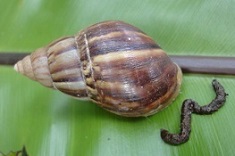
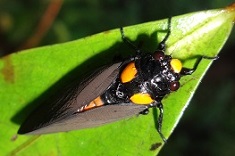
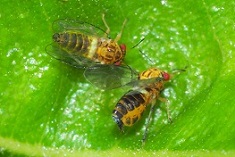
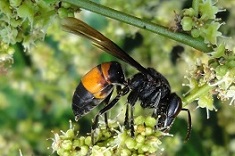
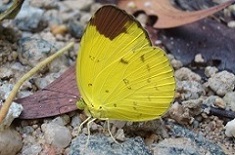
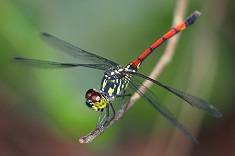
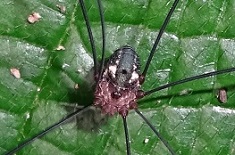
This section displays the pictures of the small or tiny creatures seen in Singapore (unless stated otherwise). As Singapore is a relatively small urban nation with little forested area, there are very few large wild animals roaming around except for some monkeys and reptiles. Nevertheless, we do have quite a range of tiny creatures in the wild. Identification of tiny creatures is always a challenge due to their size and their constant movement. There are not many pictorial references around that offer a more precise identification down to the species level (or even genus) for majority of the tiny residents of the wild. So, my identification is based on whatever information that I can get hold of. If you spot any obvious error and are happy to share with me, just drop me a note.
I will be adding sets of these small creatures gradually, as and when the sets are ready, based on my own grouping. Enjoy!
There is no doubt that butterflies are beautiful creatures, although it may not always be the case for their caterpillars. Hence, it is not surprising that they are one of the well-documented groups of insects in Singapore. Butterflies undergo a life cycle that consists of 4 stages: egg, larva (caterpillar), pupa, and adult. Conversely, moths are not that well studied. The pupa of moth is called cocoon while that of butterfly is called chrysalid. The caterpillars usually go through 4 to 7 growth stages (instars) before reaching the final pupa stage prior to the transformation to the winged adult.
Useful links: | Butterfly Circle | Butterflies of Singapore |
My encounters: | Malayan Eggfly | Lime Butterfly 1 | Lime Butterfly 2 | Striped Blue Crow Butterfly |
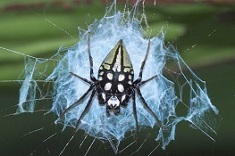
First of all, spiders are not insects. It belongs to a group call arachnid that includes scorpions, harvestmen, ticks, and mites. All arachnids have 8 legs. This feature differentiates them from insects, which have 6 legs. In addition, unlike insects, spiders do not have antennae. Not all spiders build web to trap their prey. Baby spiders hatch from eggs directly with similar features as the adults except for the size. The largest spider seen here is a rather common orb weaver, Giant Wood Spider (Nephila pilipes). I did not realize that there are so many different kinds of spiders in our midst until I started pooling their pictures together.
Useful link: | A Guide to Common Singapore Spiders |
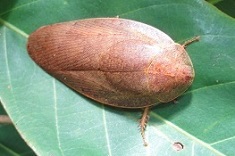
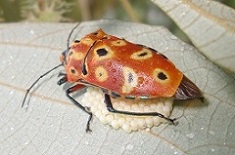
This group of insects is often known as the true bugs. Their mouthparts have evolved into a tube-like structure for piercing and sucking. Many members feed on plant fluids like sap. This section displays the pictures of the bugs in the suborder Hemiptera. There seems to be a serious void of pictorial reference for bugs here as I can hardly find any good ones so far. My favourite bug is the large shield bug with the picture shown on the left. It is a very common shield bug, at least in my area, that resides on the Dillenia suffruticosa (Simpoh Air) plant.
My encounters: | True Bugs and Their Host Plants | Large Stink Bug and Its Host Plant |
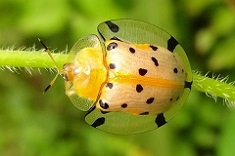
This group is also the true bugs. The only reason that it was separated from the group above is because I had thought there were 2 orders when I started out categorizing the bugs. Since then, I had decided to leave them in their existing groups. Frankly speaking, I am quite confused by the common terms used to differentiate the hoppers, namely leafhooper, treehopper and planthopper. These terms seem to be used interchangeably. Needless to say, getting hold of any reliable pictorial reference for these bugs is very tough.